
The location of a clog and the route into the pipe determine cleaning work and visit length. Clearing a reachable trap involves different access from reaching a blockage farther along a shared drain. One of our local plumbing partners outlines the cleaning method, its charges and any separate inspection proposed for a recurring problem.
Call about a slow drain or standing water now. Product names, affected fixtures and earlier attempts can be discussed during the call. For drain cleaning, your technician needs to know whether cleaner remains in the blocked pipe.
Product choice starts with the obstruction
The best clogged drain cleaner depends on the material causing the blockage and whether the product is approved for that fixture. A chemical opener marketed for hair or grease addresses particular deposits. A bottle does not straighten a displaced pipe joint or retrieve a solid object.
SC Johnson describes Drano Max Gel as a chemical product for hair, soap scum and grease. Its instructions prohibit use in toilets. That restriction illustrates why a kitchen-drain label cannot be treated as approval for every fixture. Follow the specific product's directions rather than transferring instructions from another bottle.
Enzyme products take a maintenance role
Drain cleaning enzymes target organic buildup, with their use and waiting period determined by the product label. SC Johnson describes its FlowGuard build-up remover as a maintenance treatment and expressly says it will not open clogs. An enzyme label therefore does not establish that a product will restore flow through a fully blocked drain.
Recurring loss of flow calls for inspection of the obstruction. Repeatedly buying maintenance treatments can add expense while leaving the original problem unresolved. Ask what the technician found before choosing an ongoing treatment routine.
Chemical residue changes the next safe step
Drain cleaning chemicals left in a blocked pipe add handling precautions to any later cleaning attempt. Never mix products or add bleach, vinegar or another cleaner to a drain containing an opener. SC Johnson warns that combining its Max Gel with other cleaners can produce dangerous fumes or a violent reaction.
That manufacturer's precautions also prohibit plunging during or after use because residue may remain. Poison Control warns that cleaner can splash back from a blocked drain. For your plumber, drain cleaner residue changes how a blocked trap can be opened safely. Tell your technician what you used instead of adding another dose.
Hand tools depend on fixture and pipe condition
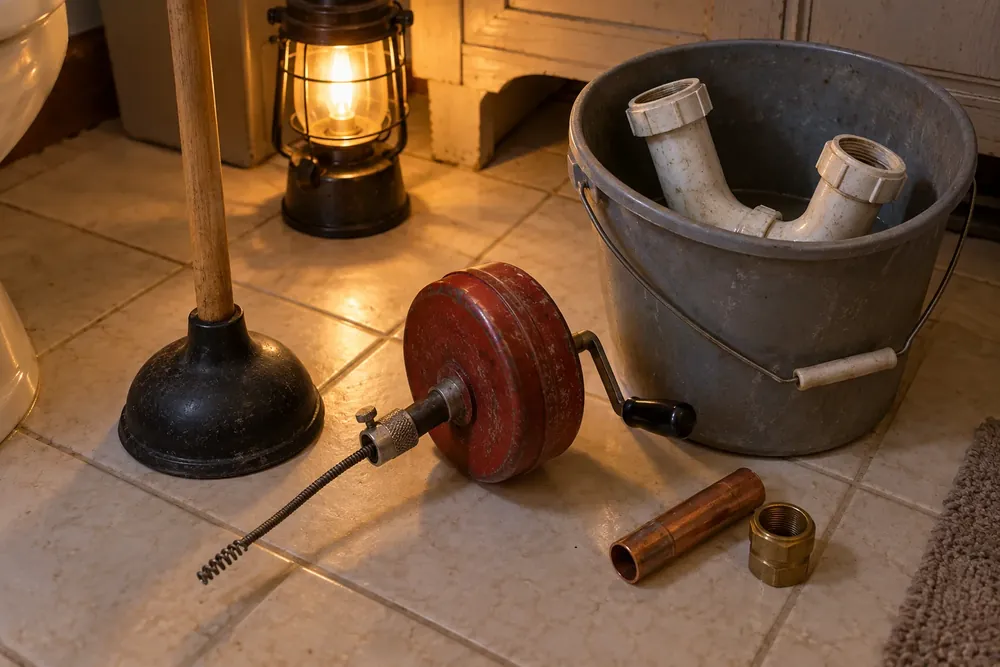
A plunger or small hand auger is a reasonable option for a minor, isolated clog when no chemical opener is present. A hand auger, sometimes called a plumber snake, reaches into a drain to engage an obstruction. Use a tool intended for the fixture; a toilet auger and a sink cable serve different access arrangements.
Stop if the cable binds or the fitting looks damaged. Avoid forcing a tool through an uncertain route. RIDGID's drain-tool information describes different cutters for grease, roots and other obstructions, which helps explain why a technician selects equipment after assessing the blockage.
Septic and older pipes need separate caution
A septic connection changes the product decision because drain contents enter a biological treatment system. EPA advises avoiding chemical drain openers for septic clogs. EPA also says septic systems do not need routine bacteria or enzyme additives to function properly.
Older piping needs an assessment of condition, especially when a trap or joint already leaks. A compatibility statement on a bottle does not establish that an existing fitting is sound. Describe visible corrosion or prior repairs during the call. Your technician checks the fitting before selecting a cleaning method.
Repeat clogs add diagnosis to cleaning
A blockage that returns or affects several fixtures may require checking the shared line, adding inspection work to clearing the immediate clog. Ask whether a camera inspection would help distinguish remaining buildup from a pipe defect. For the best drain cleaning approach, the findings should determine the method.
Searching for a drain cleaner near me is a starting point when water remains backed up. Tell your technician about the pattern rather than continuing to test products. If water still contains drain cleaner, plumber safety depends on knowing the exact product used.
Share these details during the call:
- Which sinks, tubs or toilets are affected.
- Whether clearing one fixture changed another.
- Any cleaner already added and whether water remains.
- Whether the same drain has blocked repeatedly.
If inspection reveals pipe damage, discuss the separate scope of sewer line repair. Clearing an obstruction and repairing the pipe address different findings.