
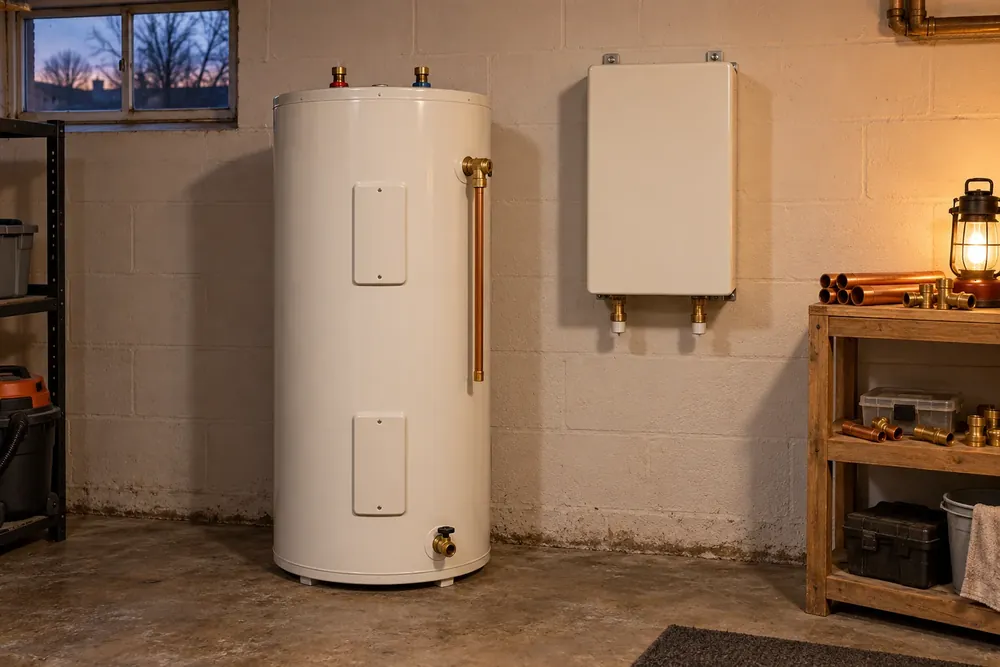
Equipment, supply changes and installation access shape the upfront cost; new connections and inspections add steps to the job. A tankless conversion needs a different scope from replacing a storage heater in its existing location. Call to discuss replacement options, and compare the complete installations before selecting equipment.
Tankless water heater cost vs tank: the installed scope
Changing system type adds cost when the existing connections need alterations. Keep equipment, labor and connection work together in each comparison. The Department of Energy's Tankless Water Heaters fact sheet describes the upfront expense and installation considerations of switching to an on-demand system.
A storage heater keeps heated water in a tank, while a tankless unit heats water as it flows through. Choosing between them involves both household demand and installation conditions. A compact cabinet does not establish whether a particular model will supply the hot water your household uses.
Best tankless water heater: gas supply and venting
Gas supply changes and a new vent route increase installation work. Your technician checks the selected unit's fuel requirements and the existing pipe capacity, then identifies compatible venting. The Department of Energy's Transitioning to a Tankless Water Heater guideline describes these checks; an existing tank connection does not establish compatibility with a new model.
Ask how the proposed location affects the vent route. A quote for tankless water heater installation should identify any changes rather than treating the appliance as a direct replacement without examining the connections.
Best tankless water heater: electric capacity
Electrical changes can add substantial work to an electric tankless conversion. Eemax's HomeAdvantage II specifications, published through Rheem, list model-specific circuit and service requirements and warn that tank-to-tankless conversions often need panel upgrades. Your technician coordinates the electrical assessment needed for the selected equipment.
The same specifications show that output depends on incoming water temperature and simultaneous fixture use. Compare rated delivery under the conditions the heater must handle. A model suited to one fixture should not be treated as a whole-house replacement without checking its capacity.
Running cost depends on use and energy rates
Running cost changes with hot-water demand, equipment performance and the rate paid for its energy source. Tankless equipment reduces the heat loss associated with storing hot water, but that advantage does not establish a particular reduction in your bill. Include maintenance in the comparison alongside energy use.
Avoid choosing on a promised payback period. Your technician explains which equipment fits the installation, while the current fuel rate and your usage inform the running-cost comparison. A change in household demand also changes that calculation.
Tankless water heater pros and cons over its service life
Maintenance affects ongoing expense and equipment condition for both systems. Rinnai's maintenance information describes scale buildup in tankless heaters and recommends regular flushing. EPA WaterSense recommends annual water-heater flushing to reduce sediment buildup. Water quality affects the maintenance discussion; the unit's instructions determine the required care. Include access for that work when planning the location.
The Department of Energy's Tankless Water Heaters fact sheet describes longer expected service life for tankless equipment than conventional storage heaters. That comparison does not set a replacement date for an individual unit. A repair assessment considers the fault and condition of the equipment.
Use the following points during the replacement discussion:
- When: Replace hot water heater tanks that leak through the tank itself; a leaking connection needs its own diagnosis.
- Condition: Compare recurring faults and proposed repair work with a complete replacement scope.
- Access: Keep service points reachable rather than filling every space around the new unit.
Best tankless water heater brands for the installation
Future service cost depends partly on access to parts and the maintenance required for the selected model. Ask your technician to explain the model recommendation, including delivery capacity and service access. A familiar brand name does not settle those questions or establish that the existing supply connections are suitable.
For the best water heater installation near me, compare proposals that identify the equipment, connection changes, testing and permit handling. One of our local plumbing partners reviews the installation choices and explains the price for the selected scope before installation starts.
How installation changes affect timing
Supply alterations, a relocated heater and required inspections extend the replacement sequence. Your technician explains which tasks belong in the proposed installation and how they affect the interruption to hot water. Keeping a tank in the same position still requires checking the connections rather than assuming everything can be reused.
Allegheny County Health Department includes water-heater replacement cards in its published plumbing permit process. Discuss applicable approvals as part of the installation scope. Call about water heater replacement now, and describe the current system during the conversation.
Sources
Public pages behind the details about tankless vs tank water heaters.